



































An adjustable wrench has more than one size
Overall length, jaw opening and head clearance answer different questions. Read them separately when choosing an adjustable wrench.
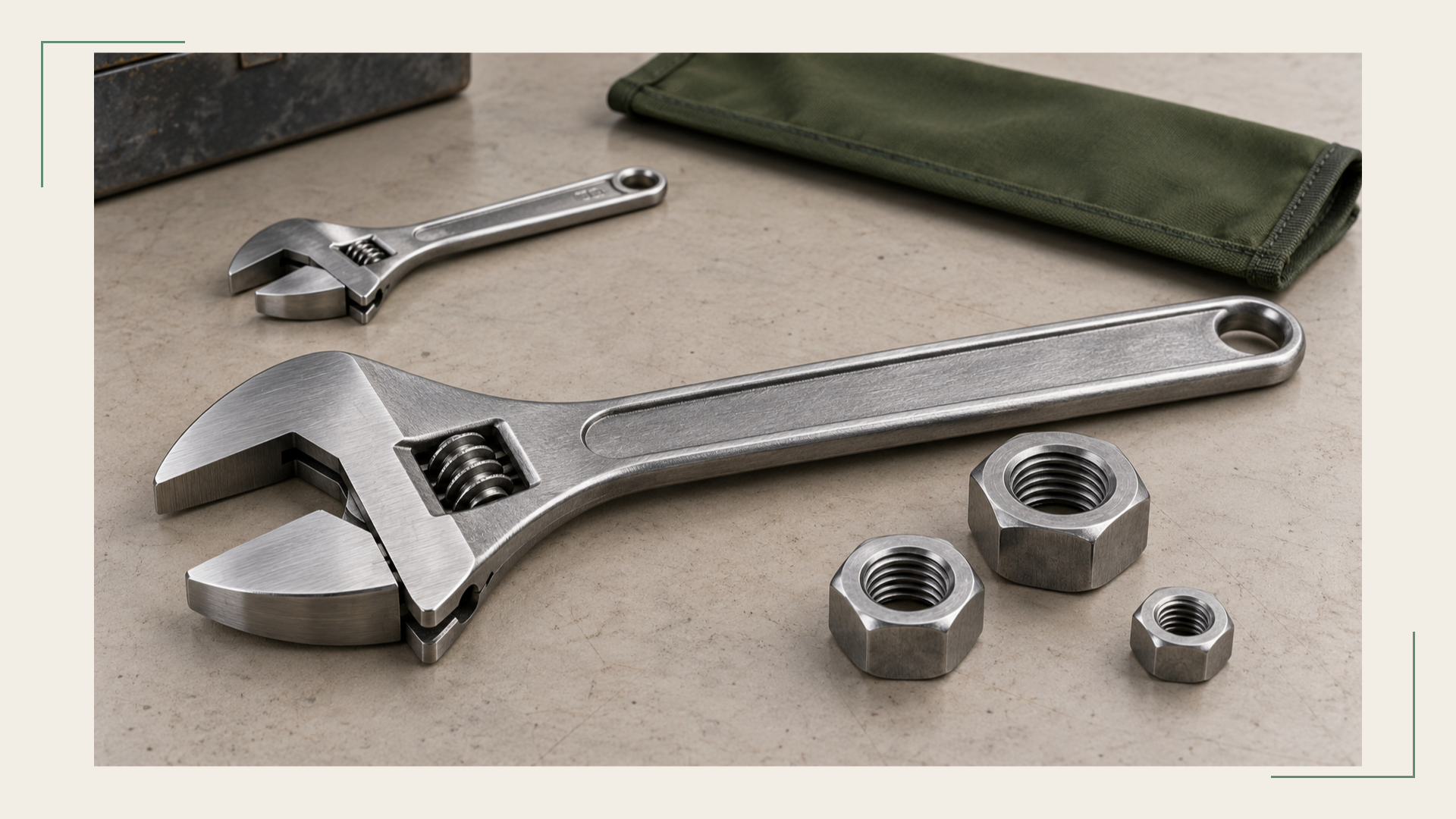
“Eight inches” sounds like a size. On an adjustable wrench, it usually describes the overall length, not the largest nut the jaws can accept. I would keep that distinction on the first line of a product brief. Otherwise two suppliers can answer the same enquiry with tools that are similar in length but different where the work happens.
The opening between the jaws is another dimension. Ask for it in millimetres, with a drawing showing what is being measured. A figure printed beside the product photograph may refer to the overall length, maximum opening or something else. Rather than guessing, I would put those dimensions in separate boxes. Bahco's published product data, for example, lists wrench length and jaw capacity separately. That is a useful way to read a specification; it is not a reason to apply one model's figures to every adjustable wrench.
There is also the space around the fastener. Think of a hypothetical assembly with a nut close to a panel. A tool may open far enough to fit the nut and still have a head too thick to reach it. I would send a dimensioned sketch of that space, or arrange a fit check with the mating part. The head thickness, jaw depth and available movement matter here. A wider maximum opening does not answer the clearance question.
An adjustable jaw moves along the head as the adjusting screw turns. On a sample, I would check that travel over the intended working range rather than looking only at the fully open position. Close it around the agreed reference part and look at how the faces meet. Record the model, reference size and observations. A photograph of a shiny tool on its own tells much less about that fit.
I would be careful about calling a plain adjustable wrench a pipe wrench. Some models have a reversible jaw or another feature for different work; that has to be established for the offered tool. Do not carry a feature over from an illustrated model to a cheaper alternative just because the handles look alike. Put the actual jaw configuration in the brief and keep its photograph with the sample reference.
The handle is worth picking up too. If the tool will go into a compact kit, I would check its packed dimensions and whether the adjustment remains accessible in that kit. A soft grip changes the outside shape. It may suit the intended user, but it still has to fit the case or pouch being supplied. Colour alone is an incomplete description of the handle.
For an order, I would therefore want a small drawing and a retained sample, not simply a line saying “8-inch adjustable wrench”. The drawing should identify overall length, jaw capacity and the dimensions that control access. The sample should identify the jaw configuration and handle version. Keep any claims about load or performance tied to evidence for that model. Where the job requires controlled torque, have the responsible engineer select and specify the appropriate tool and method. The size written on an adjustable wrench is not a torque setting.
Share the product, specifications, quantity and destination to discuss sourcing options.