



































A Storage Box Has More Than One Useful Set of Dimensions
Distinguish the closed box footprint, usable internal space and empty nesting arrangement when comparing plastic storage boxes.
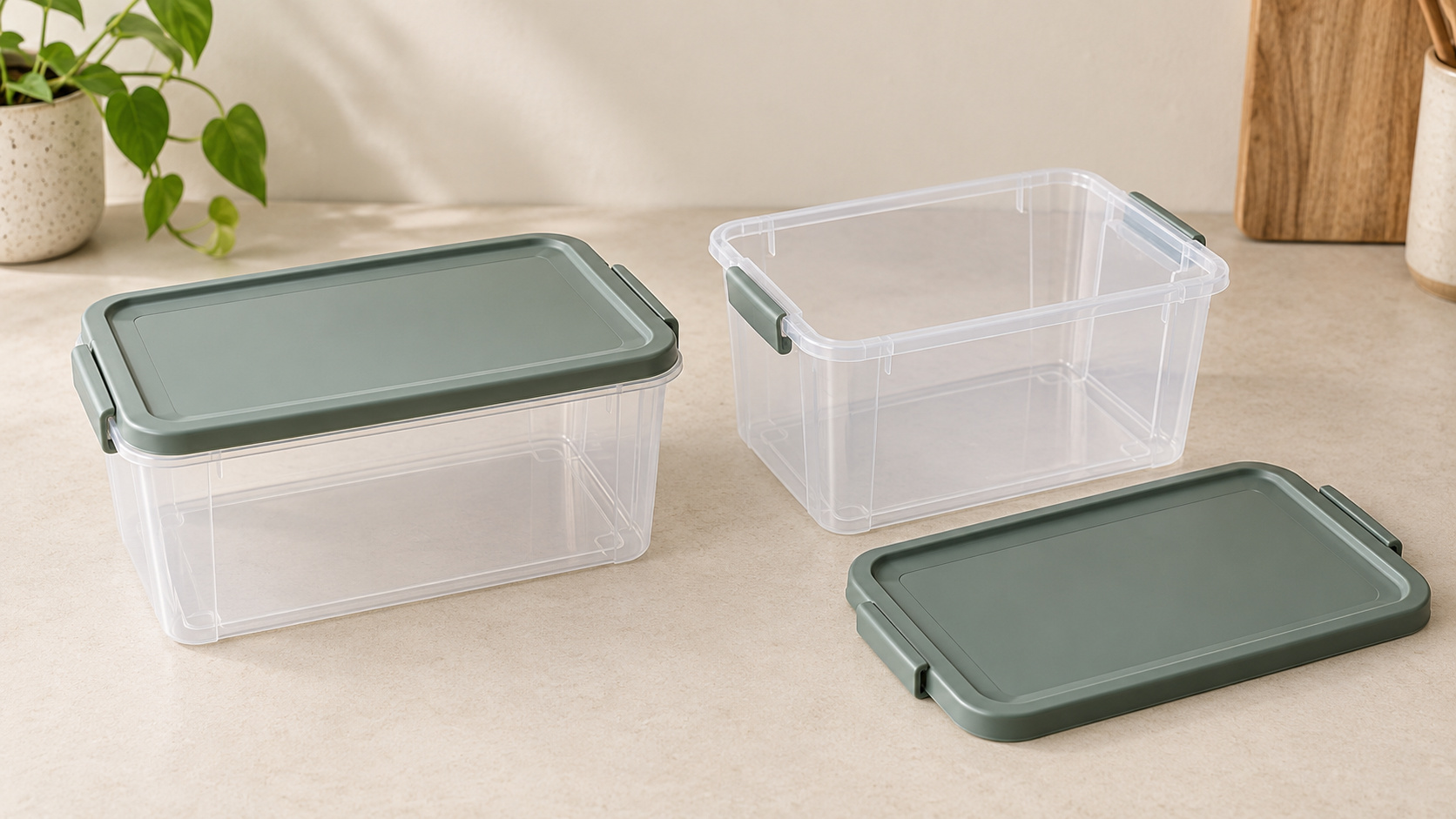
For a plastic storage box that had to fit a particular shelf, I would begin with the closed box rather than its litre figure. I would ask the supplier which parts were included in the quoted outside dimensions. The lid, handles or latches could be the parts nearest the shelf opening. A useful returned drawing would show the box in the supplied closed configuration, with those projecting parts visible.
There would be a second set of dimensions for the contents. Really Useful Products explains its own measurement convention as the maximum outside size with lid and handles in place, and the minimum inside dimensions. I would ask the offered box's supplier to state its convention too. The dimensions of that manufacturer's product would not become dimensions for another box. For the enquiry, I would keep an outside view and an inside view against the actual model reference, with length, width and height directions named.
If the intended contents were rigid, I would want to know where the narrowest inside space was. For a tapered box, an opening measurement alone would leave the base area unresolved. I would send the dimensions or a representative sample of the item to be stored and ask the supplier to show its proposed position inside the box. If several items were to sit side by side, the layout would be part of the question. I would not calculate that arrangement from nominal capacity alone.
For the lid discussion, I would ask for a side view of the supplied box with the proposed contents inside. The photograph could show the lid both removed and fitted, using the same sample and arrangement. If the supplier proposed a higher lid, I would request another view with that lid fitted and ask for the resulting outside height. I would want its item reference on the reply too. That would keep a quotation for the base with a flat lid separate from the option using the higher lid, even where the supplier used the same base moulding for both.
I would also ask what happened when the boxes were empty. Stacking on top of another box and nesting inside it are different arrangements. SSI Schaefer's published container information, for example, includes designs that change between these arrangements through rotation. I would ask for the instructions of the actual offered design rather than assume that turning any box would make it nest. For a nesting claim, I would request a sample photograph and the overall height of an agreed number of empty boxes in that arrangement, with the lid positions shown separately.
I would put the returned views beside the model references in the comparison file. For the shelf opening, I would use the closed outside envelope including the specified lid and handles. For the items inside, I would return to the internal dimensions and their proposed layout. The empty-box photograph would answer a different question about the nesting arrangement. I would ask for any proposed loading or stacking limits in a separate specification, with supplier evidence relevant to the intended use. Until that was supplied, the dimensions and photographs would remain records of shape and fit, with no load rating entered against them.
Share the product, specifications, quantity and destination to discuss sourcing options.