


































Read the Tent Quotation with the Carry Bag Open
Separate the tent body, rainfly, footprint and carrying package before comparing supplier specifications.
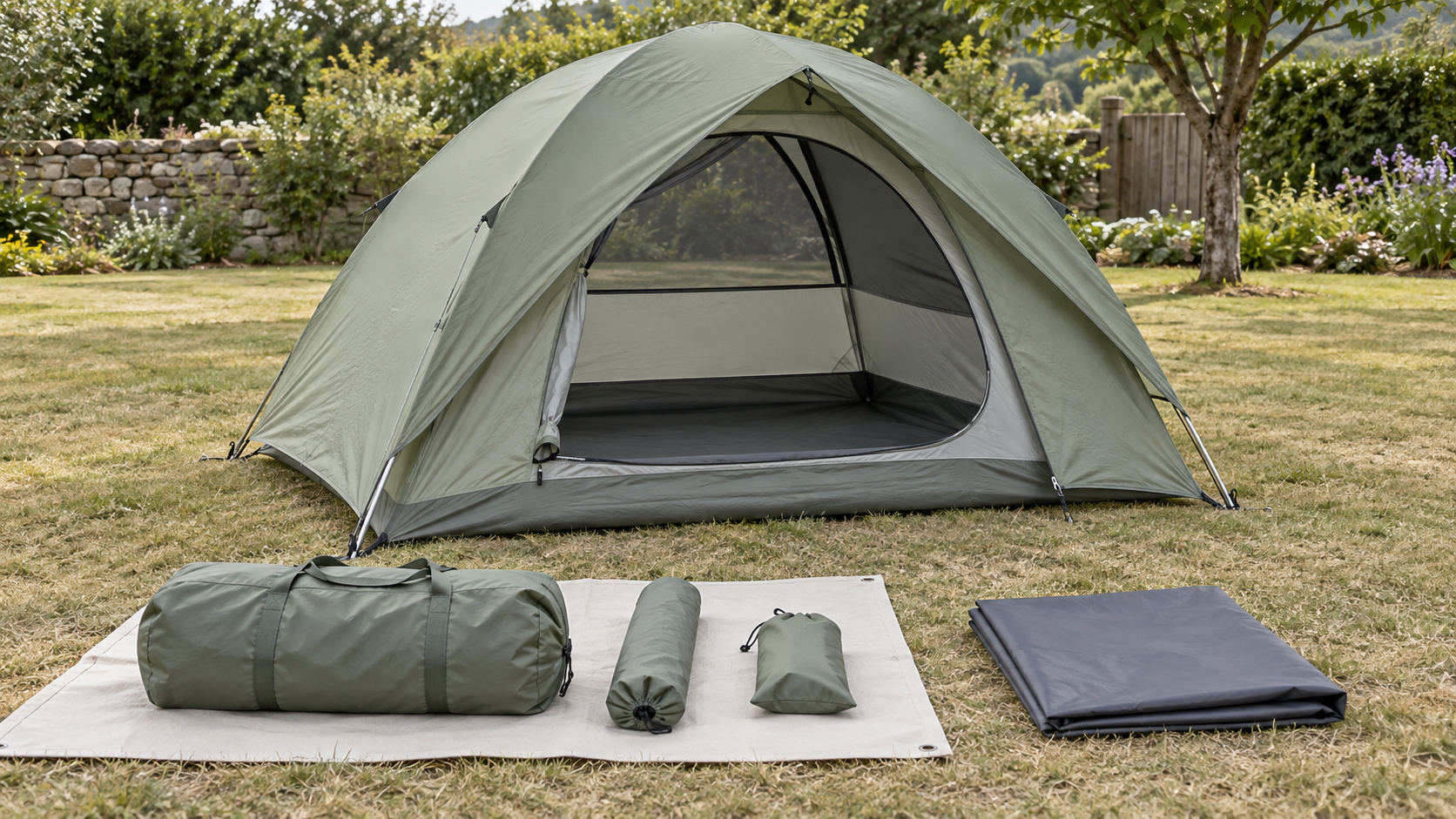
Does the groundsheet in this photograph come with the tent? Until the answer comes back, I would leave the groundsheet line unpriced in the comparison. Any visible bag or spare piece would receive another row. To fill in those rows, I would request an unpacked-contents view from the supplier, with the empty bag beside its contents. The returned list could identify which numbered object answered each row. Presentation-only objects need a note too.
The first two entries I would look for are body and rainfly. Are they separate pieces in the quoted design? Which piece appears in the open-door photograph? The reply would give the buyer names to use when discussing the sample. For a footprint, I would ask for a separate yes or no in the supplied-items column. REI's Base Camp 6 product page identifies a compatible footprint as not included; that is one package's scope, rather than a rule for tents generally. If the supplier offers one, its reference would belong beside the quoted tent reference.
I would put the dimension drawing beside the photograph and look for the inner-floor edge. If that edge was missing, I would send the drawing back for a marked version, with any vestibule shown beyond it. A sleeping-mat layout, if provided, would have to be read within the inner-floor outline. I would keep the nominal sleeping capacity beside the plan, leaving the actual floor measurements available for comparison. Beside the height, I would write down the measurement position returned by the supplier. For a peak measurement, the marked point and an interior view would let the buyer see the sloping roof around it. The rest of the interior would remain a shape to examine, rather than inheriting the peak height.
A small bag marked accessories is still an unopened question on the enquiry sheet. I would ask for its contents to be counted under the supplier's names for the pegs, lines and other pieces. The pole bag would get its own entry. The answer belongs in the sample record. I would use the same approach for a repair sleeve or spare pole section. For an illustrated spare, I would want a reply against that particular image reference: included, or separately priced. Without a reply, I would keep the item out of the promised contents.
I would ask for a second photograph with the quoted contents packed away. Its record would identify the bag, the contents used for the measurement and whether the optional footprint was inside. The stated packed dimensions and weight could then be read against that record. Shipping information would have a different heading: carton dimensions, gross weight and the number of sets per carton. Retail packaging may have its own measurements as well. I would keep the supplier's units beside each figure instead of copying a bare size into several fields.
At the listing stage, I would return to those two photographs: contents out, then contents packed. I would read the proposed description while pointing to the corresponding items in the contents view. If a second view shows the body without its rainfly, that state belongs in the caption. A material description or weather-performance statement would send me to the specification file for supporting information before publication. The photographs establish what can be seen. They leave a performance claim to its documentation, and they leave an optional accessory clearly outside the included set until it is ordered.
Share the product, specifications, quantity and destination to discuss sourcing options.